



A future of community, justice, happiness and hard work await.
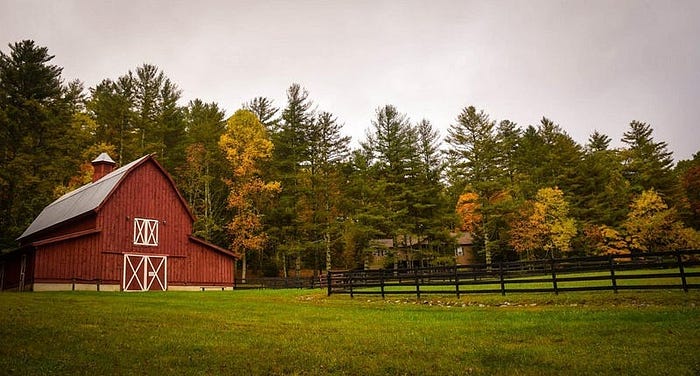
Land is life. image pxhere.com
Author’s note: My Substack is called Make Earth Sacred Again. Before the destruction of Gaza began, I was writing pieces like Bring Back the Bugs and Ten Ways to Stabilize the Climate. Occasionally I wrote about the disastrous nature of the Israel / USA alliance, or about the extremely mixed blessings of capitalism, but mostly about Earth. I had also started work on a book about building communities in high rise apartment buildings. I thought of these projects as different approaches to a better life.
Sadly, In the years of Israel’s scorched Earth ethnic cleansing campaigns in Palestine, Lebanon, and beyond, all the other topics have come to a stop. I’ve found it nearly impossible to focus on making Earth sacred or building community. I know people in those Middle Eastern countries, and I hate what is being done to them in my name and with my tax money. I’ve been writing pieces like How Zionists Became the New Nazis, and Why Zionism is Antisemitic to Its Core.
I believe such stories share important information with readers, and I’ve learned a lot in the process of writing them, but dwelling on horror doesn’t sastisfy. I doubt that what I’m writing does any good, and in the back of my mind, I always remember what is happening to our Mother Earth. Civilization is ravaging Nature as completely as what Israel/US bombs are doing to Gaza and Iran. I feel that, on some level, imperial wars and the war on Earth are the same war, with the same cause, modern civilization’s separation from Nature.
Think for a moment about the physical world, the living Earth. Everything here is in rhythm, the seasons, days and nights, birth, growth, and death, the endless cycles of life. Within those cycles, we are never alone. We share with families, friends, neighbors, society, animals, plants and smaller living things, rivers and bigger things. In her book, The Serviceberry, Native American botanist Dr. Robin Wall Kimmerer reminds us how nature showers us with gifts every day: warmth, food, water, beauty. Even the air we breathe is a product of other living things. Living in a world like that, there is no reason to be anxious or alienated. Life should be a source of joy, an opportunity to love and create.
But most of us don’t live in a world like that. Many live in cities built on top of pavement, and we rarely get to touch the land or a non-human living thing, except maybe a pet. With information technology, we tend to separate from other humans as well, spending most waking hours looking at screens or listening to headphones. Capitalists like it that way; all we can do is work and buy stuff.
Tech world not a happy or healthy way for a person to live, but health effects are not the worst of it. Our leaders have long ago taken leave of the physical world and only think of life in terms of money and power. In her book, Imagination: A Manifesto, historian Ruha Benjamin describes how tech billionaires dream of letting go of their bodies and our planet and colonizing space as a throng of disembodied robots. Divorced from Nature, our leaders create chaos and wars, because they don’t recognize the pain they are causing or the beauty they are destroying.
That is the world we live in now, a world in which machine men think they have made Nature irrelevant and proceed to destroy anything and anyone that interferes with their profits. If you doubt me, look at Gaza. That is the future on our present path.
Can anything be done about this existential crisis? It would have to be a program that heals us as people and societies, and also heals Nature so it can continue to provide for us. Until recently, I could imagine no such program. Then a ray of hope came to my Inbox.
Press enter or click to view image in full size
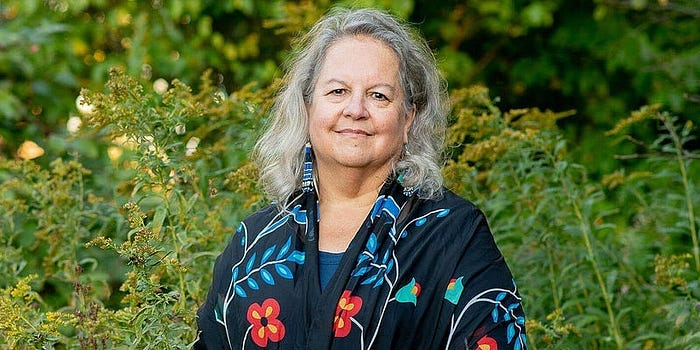
Robin Wall Kimmerer Image uwalumni.com
The power of plants
Robin Wall Kimmerer is the greatest writer I have ever read and the wisest spirit I have ever encountered. Her book Braiding Sweetgrass weaves stories, science, and indigenous wisdom to create an inspiring, compelling case for loving and reconnecting with the natural world.
Braiding Sweetgrass has sold millions of copies and has been translated into at least 20 languages, but, in the real world, nothing has changed. In fact, wars, consumer culture and industrial technology have accelerated the destruction of the planet and its people, both human and other-than-human. Books can only do so much.
Now, at age 73, Kimmerer has become an activist. She has founded a global organization called Plant Baby Plant (PBP), a take-off on the oil companies’ “Drill baby drill” mantra. When I was first introduced to PBP’s page, I was blown away. They have a plan to reconnect people with Nature, build community, challenge power, and create a sustainable economy. It’s very radical but at the same time completely down to earth and doable for almost anyone who wants to participate.
PBP’s slogan is “Raise a garden; raise a ruckus.” I’m going to write more about their program as I learn it and interact with it, but here are some main points.
Heal the Land
Creating a healthy world and/or fighting the imperial war machine can’t be just an intellectual endeavor. It’s not just going to demonstrations or calling your Congressman. You have to get your hands dirty. You have to fight, to make actual change. PBP write, “We ally ourselves with the good green world in support of climate resilience and biodiversity. We plant trees, raise gardens of all kinds, protect wetlands, restore prairies, and so much more. The success of our movement will be written on the land.”
Do you find it a bit hard to believe that planting native flowers or restoring a wetland could change the behavior of billion dollar military industries and their bought politicians? It is hard to believe, until you realize that connecting to the land strengthens and stabilizes people and communities. It points the way to the society we want, what Mahatma Gandhi meant when he said, “Be the change you want to see in the world.” By growing food and making connections, we become stronger and more effective..
Build Community
“We will grow the circle of people who work with the land,” PBP write. “We offer learning, inspiration, and connection as an antidote to feelings of isolation and powerlessness. Relationships and the joy of shared purpose will sustain us for the work ahead.”
I am very much dawn to this. I’ve worked for years to build community in my urban highrise (the book I wanted to write), but it’s very slow going. If we had some place to grow food together or some trees to protect, some shared sustainable purpose, some mutual dependence, I think a community would naturally grow and knit together. People would be less anxious, less alone, happier, less likely to starve when they have people who care about them. This is “being the change.”
Grow Power
If the world is to survive, we need a new economy, and PBP has one based on connection. They say they “offer a compelling alternative to an extractive worldview. We transform love of land into social change through acts of creative resistance. In addition to planting trees and food and wildflowers, we plant our feet and say “no more destruction”.
The idea is to gradually build an economy based on sharing and gift, a world where children learn to give and receive freely. Kimmerer calls this ‘reciprocity.’ We have been taught for centuries that society is modeled on hard economic rules like individuals’ drive to maximize gain, or like supply and demand. We obey these rules or die, because they are baked into human nature.
But these “rules” have not applied in all places and times. They are not hard science. There are indigenous societies and religious communities where they don’t apply even today. We can realize that economic rules are only narratives written by the rich and powerful and their academic handmaidens. Change the narratives, and reality will change. Working with living things, we will see reciprocity in action every day. We can see how the world really works, Then we can make it normal in our own lives..
PBP insist on “futures rooted in reciprocity, gratitude, and abundance.” Imagine being raised in a culture that frames economics around abundance, instead of the every-man or woman-for-themselves-in-a-world-of-scarcity approach we are taught from birth under capitalism. What a different way of life that would be! Instead of ruling the world, Musk, Trump, and the rest of the Epstein class would have to go back to their islands. Nothing they do would make any sense.
So, that’s a start. There’s so much more to say about this Earth-based approach. It won’t take the place of political action. We will still need a revolution, but PlantBabyPlant gives us a way to strengthen our movements and an easily-explained outline of what we are working toward. We can learn and teach a lot from plants.
In coming weeks, I’ll be writing about the values of the movement, its scientific and spiritual connections, and how we can live every day in connection with Nature, even in a city. I will interview some PBP leaders.
I will never stop writing about Palestine. I don’t see planting as distracting from political activism. It’s more about providing a strong base from which to fight. Join us.
— —
Thanks for reading! Please comment, share, or repost, with or without attribution. Join my Substack community Make Earth Sacred Again. To hire me for freelancing, editing, or tutoring, e-mail me here.
#The_UN_Goals #protecttheland #together #nvaction


